
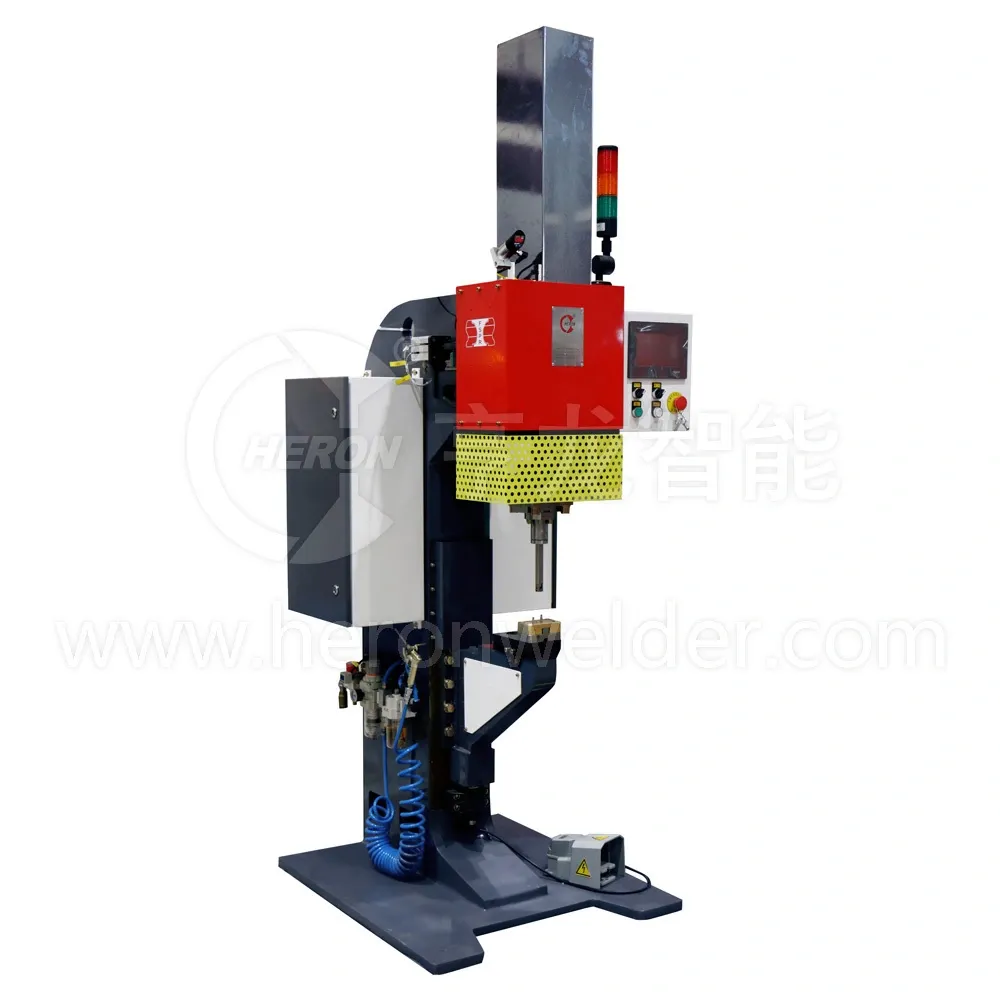
In high-throughput manufacturing sectors like automotive body fabrication and commercial transport assembly, adopting lightweight materials requires innovative joining technologies that operate cleanly without heat. Integrating an advanced self pierce riveting gun into your automated production environment allows plant engineers to form high-strength mechanical joints across dissimilar metals without pre-drilling holes or creating thermal distortion. As modern designs rely increasingly on combinations of aluminum alloys, high-strength steels, and composites, factories need cold-fastening tools capable of delivering precise mechanical force across rapid cycle times. Heron-Welder leads the industrial joining sector by offering high-performance mechanical riveting equipment engineered to streamline factory operations, eliminate heat-related rework, and ensure uncompromising structural reliability.
The Engineering Advantages of Cold Fastening in Assembly Lines
Joining modern lightweight materials using conventional thermal arc or spot welding often introduces significant quality hurdles, including panel warping, zinc coating damage, and brittle intermetallic alloy formation. Mechanical cold joining solves these material compatibility challenges by mechanically interlocking sheet metal layers without applying intense thermal energy.
The process operates by driving a high-strength semi-tubular rivet directly through top sheet layers, flaring the rivet shank outward into the bottom sheet inside a shaped die. Executing this mechanical join across millions of continuous production cycles requires specialized tooling engineered to maintain consistent setting force, precise stroke depth, and rapid rivet feeding. Using a high-capacity self pierce riveting gun ensures that multi-material joint stackups achieve superior static shear strength and high fatigue resistance while preserving the corrosion-resistant surface coatings of the base materials.
Advanced Tooling Engineering by Heron-Welder
Heron-Welder has built an international reputation as an innovative developer of resistance welding and mechanical joining machinery, continuously delivering advanced tools tailored for high-demand factory environments. By combining compact servo-electric actuation, high-rigidity C-frame structures, and automated rivet feed systems, tools manufactured by the brand deliver high insertion force with exceptional positional accuracy.
Deploying a lightweight, heavy-duty self pierce riveting gun engineered by the company gives manufacturing facilities complete control over insertion speed, clamp pressure, and die seating depth. The smooth application of mechanical force prevents sheet buckling, maintains tight dimensional tolerances across complex body structures, and extends die lifespan during high-volume production shifts.
Strategic Operational Advantages for Industrial Facilities
Upgrading factory assembly lines with specialized mechanical joining equipment from Heron-Welder provides tangible operational and financial advantages:
- Dissimilar Metal Compatibility: Easily joins combinations of aluminum sheet metal, ultra-high-strength steel, stainless alloys, and non-metallic composites.
- Eco-Friendly Working Environment: Operates without generating open thermal arcs, welding spatter, intense flash, or toxic fumes, eliminating air extraction infrastructure expenses.
- High-Speed Automated Throughput: Compact tool design enables seamless integration with robotic end-effectors, stationary pedestals, and flexible automated assembly cells.
- Water-Tight Structural Joints: Forms clean, flush top surfaces with hermetically sealed bottom joint buttons, protecting assemblies against moisture ingress and rust.
To ensure optimal operational fit, Heron-Welder collaborates directly with factory managers to customize C-frame reach profiles, rivet storage magazines, and automated feed tracks designed around specific part geometries.
Overcoming Multi-Layer Fastening Challenges
Joining modern lightweight structural components requires strict force management during every phase of rivet insertion. Operating a standard self pierce riveting gun without dynamic force regulation can result in button cracking, under-set rivets, or panel distortion when sheet thickness or material hardness varies slightly between supply batches.
Equipment engineered by Heron-Welder incorporates dynamic force sensing and real-time stroke feedback algorithms to overcome material variance hurdles. The machinery measures insertion resistance and punch displacement continuously during stroke execution, automatically adjusting applied force to ensure proper rivet setting depth even across varying sheet stackups. This dynamic responsiveness prevents joint defects, eliminates manual rework, and significantly lowers scrap rates across every manufacturing shift.
Digital Quality Control for Zero-Defect Production
In safety-critical applications like automotive chassis structures, electric vehicle battery tray enclosures, and aerospace panel assemblies, joint failure can lead to catastrophic structural risks and expensive product recalls. Relying solely on periodic destructive testing or visual inspection in high-speed, automated lines creates operational vulnerabilities.
To ensure total manufacturing quality, machinery developed by Heron-Welder incorporates digital monitoring platforms that record comprehensive performance metrics for every stroke executed by the self pierce riveting gun. By analyzing force-displacement curves, peak insertion pressure, and rivet seating depth in real time, the system continuously verifies process stability, instantly flagging process anomalies and stopping non-conforming assemblies before they advance further down the line.
Future-Proofing Assembly Operations with Heron-Welder
As global manufacturing continues transitioning toward multi-material designs, higher automation, and digital process verification, industrial facilities must upgrade legacy infrastructure to maintain competitive production metrics. Outdated joining tools limit material flexibility, increase rework costs, and expose facilities to structural quality risks.
Investing in an advanced self pierce riveting gun from Heron-Welder equips manufacturing facilities with the operational speed, force precision, and digital tracking capabilities needed to excel in a demanding market. Backed by deep technical expertise, responsive global service, and heavy-duty equipment construction, Heron-Welder continues to empower global manufacturers to optimize assembly workflows, lower operational expenses, and deliver superior metal products.